REVIEW · CORFU
Tour in Corfu Town: Historic Buildings & Great Personalities
Book on Viator →Operated by Corfu Perspectives Guided Tours · Bookable on Viator
Corfu Old Town feels personal on foot. This walking tour links famous Corfu residents to the streets and grand buildings of the UNESCO center, with a licensed guide doing the heavy lifting of context. You’ll move through plazas and quiet lanes and learn why so many different cultures left their marks here.
I especially like the small group size (up to 8), because it keeps the pace human and questions practical. I also like the 2.5-hour timing—long enough to get oriented and spot the big sights, short enough to still enjoy the rest of your day.
One consideration: the meeting point is at a specific statue near the Old Fortress gate, and it can be a bit of a scavenger hunt if you’re rushing off a cruise shuttle. For most people it works fine, but plan a few extra minutes.
In This Review
- Key things to know before you go
- Where this walk starts: the statue by the Old Fortress gate
- Corfu Old Town: UNESCO streets, Venetian-style mansions, and the personalities behind them
- Old Fortress, Spianada Square, and Liston: the city’s “front porch” moments
- Why this part is worth your time
- City Hall Square, the Duomo, and the Old Theatre: power, worship, and public culture
- Ionian Parliament and Ionian University: modern politics with older bones
- Campielo neighborhood: everyday life in a historic setting
- Palace of Saint Michael and Saint George: name tells you the story
- Jewish district and synagogue area: one more layer of Corfu’s community history
- The pacing: 2 hours 30 minutes that won’t swallow your whole day
- English on Fridays, German on Mondays: pick the language that fits your trip
- Price and value: $90.36 for a licensed guide in a UNESCO core
- Who should book this walking tour?
- Should you book this Old Town tour?
- FAQ
- What does the tour include?
- How long is the tour?
- Where does the tour meet?
- Is the tour available in English?
- Is there an admission ticket cost?
- Can I film or record audio during the tour?
- Is this tour refundable if plans change?
Key things to know before you go
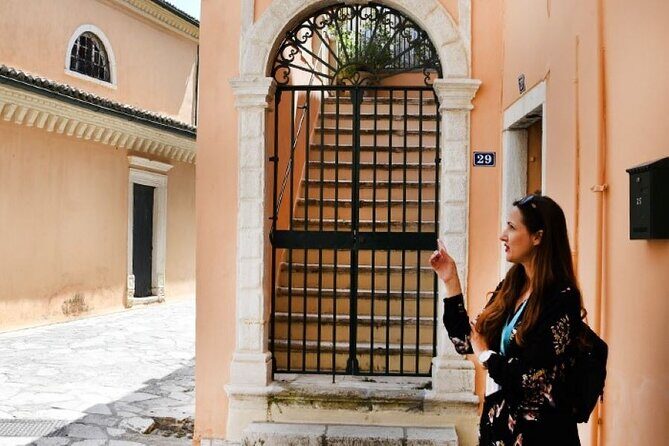
- Licensed guide included: You’re not paying extra for the person doing the storytelling.
- UNESCO Old Town focus: The route is built around Corfu’s most important historic spaces.
- Small group (max 8): Better flow on crowded streets and easier photo stops.
- 2.5 hours on foot: Comfortable for a morning, with time left for lunch or beaches.
- Limited tech rules: No video filming or audio recording during the walk.
- Not ideal for limited mobility: It’s a walking tour, and it’s specifically not recommended for people with limited mobility.
Where this walk starts: the statue by the Old Fortress gate
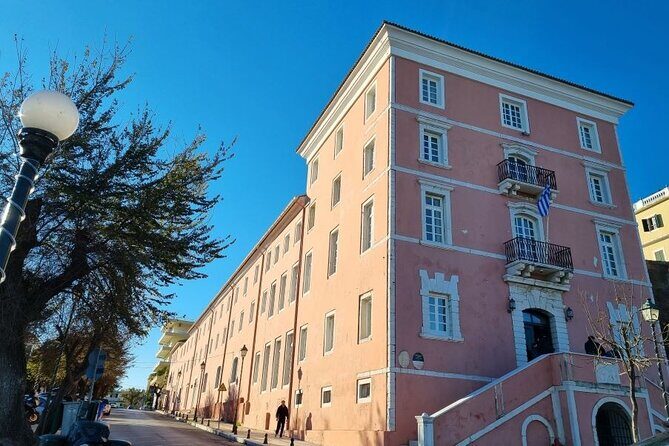
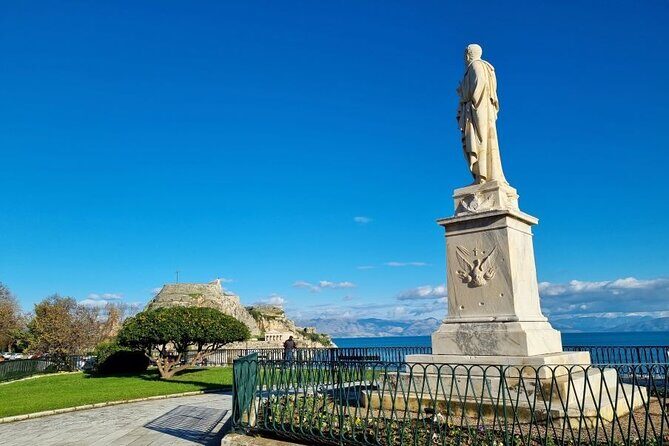
The tour meets at the Statue of Count Von Der Schulenburg, at Agoniston Politechniou, Corfu Town. The key practical detail is that this is the Gate of the Old Fortress area, which is a popular meeting spot for cruise visitors because shuttle buses stop there.
That’s good news if you’re arriving by cruise and want an easy landmark. Still, bring a little patience. You’ll be on foot in a busy old-city area, and it’s easy to drift half a block without noticing. My advice: get there early, then wait at the statue itself rather than trying to match the group from the street.
Also note the tour ends right where it starts, so you’re not stuck figuring out a second transfer point. It’s simple: walk, learn, head back.
More Corfu Old Town Walking Tours


Corfu Old Town: UNESCO streets, Venetian-style mansions, and the personalities behind them
The main (and only) stop is Corfu Old Town, the UNESCO-listed core of the city. Think of the tour as a guided “who-why-when” walk: you see iconic buildings, but the guide also connects them to the people who shaped Corfu and to the way different eras changed the city.
The route moves through both lively squares and quieter cobbled lanes. That mix matters. Squares help you understand the city’s public life—where power, religion, and administration showed up in stone. Side streets help you feel how everyday life worked and how wealth and influence could hide behind narrow facades.
You’ll get plenty of photo opportunities along the way, but keep the rules in mind: no video filming and no audio recording are allowed on this tour. That means you’ll rely on your camera for stills and on your own notes or memory for everything else.
Old Fortress, Spianada Square, and Liston: the city’s “front porch” moments
One of the first big anchors is the Old Fortress area. Even if you’re not going inside, it helps explain why Corfu was shaped by defense and strategy. Seeing it from street level gives you a sense of how geography and politics mattered, long before modern travel maps existed.
Next comes Spianada Square, one of the city’s signature open spaces. On a walk like this, squares act like time stamps. You can spot how the city organizes movement—where people would gather, where important buildings face the public, and where “official” architecture stands next to everyday life.
From there, you’ll head toward the Liston, an elegant building frontage known locally for its refined feel. The point of stopping here isn’t just to admire it; it’s to notice how Corfu’s design language blends eras. You’ll also have a chance to look at how street life works around these grand edges.
Why this part is worth your time
If you’ve ever visited a historic city and felt lost—like you were only seeing pretty buildings without the meaning—this is where the guide can fix that. By the time you reach the larger squares, you start recognizing how the city “thinks” in space.
City Hall Square, the Duomo, and the Old Theatre: power, worship, and public culture
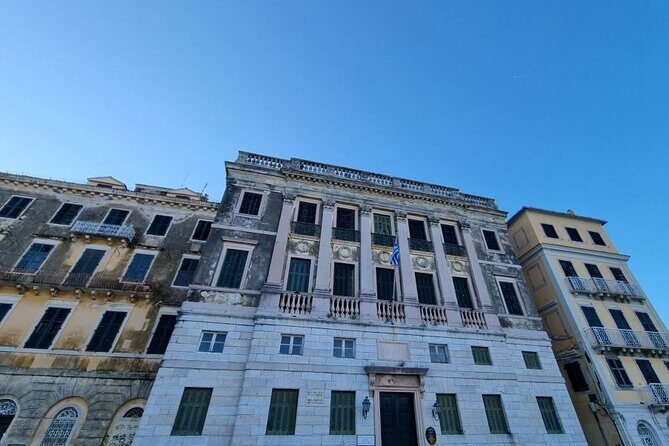
The walk continues to City Hall square, where you’ll also see the Duomo and the Old Theatre. Even without deep stops inside, these are high-signal landmarks. They tell you that Corfu isn’t only a museum of old architecture; it has a continuing civic and cultural role.
The Duomo area connects the religious story to the city’s public identity. The Old Theatre adds a different layer—performance culture, community gathering, and the kind of public life that needs an audience. Seeing the two in the same vicinity helps you understand how Corfu structured important moments: faith, government, and entertainment all had visible addresses.
If you want to get the most from this section, slow down and watch where your feet naturally steer you. In old towns, the best “reading” comes from how people move between landmark clusters.
Other historical tours in Corfu






Ionian Parliament and Ionian University: modern politics with older bones
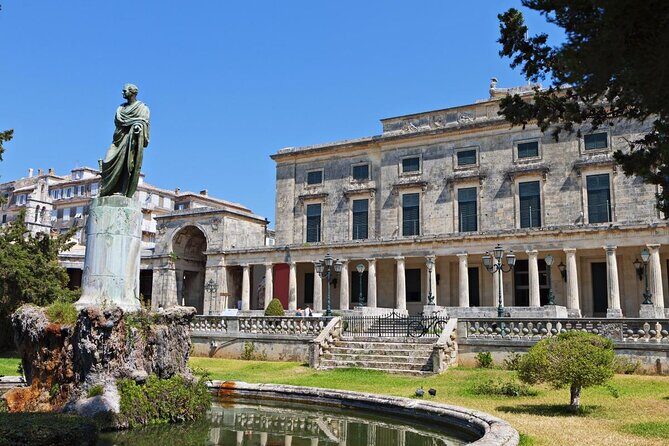
The tour then takes you toward the Ionian Parliament and the Ionian University. This is the sort of stop that can surprise first-time visitors: you see institutions tied to learning and governance, and you realize Corfu’s story continues well after the earliest phases of fortifications and old merchant life.
For you, the value here is perspective. Instead of treating Old Town as frozen-in-time, the guide helps you see how Corfu kept reorganizing itself. Institutions don’t just sit in place—they represent priorities. And that’s exactly what a guided walk can clarify quickly.
When you’re walking, don’t just look at the buildings as objects. Look at the street they face. The placement matters—these places weren’t chosen randomly.
Campielo neighborhood: everyday life in a historic setting
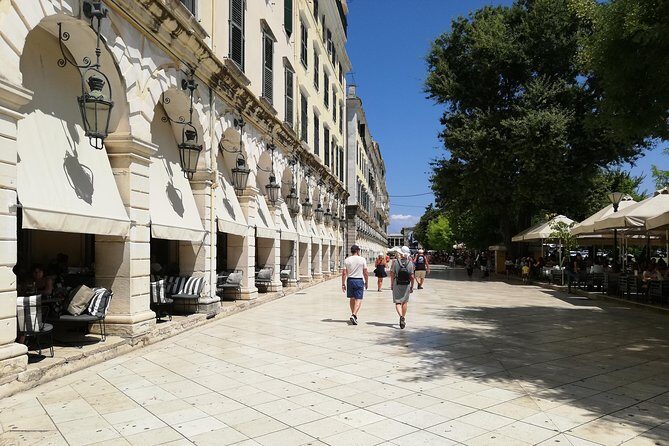
Next is Campielo, described as a historic neighborhood area within the Old Town. This is where the tour starts feeling more like a “lived-in city” rather than a list of monuments.
Neighborhood stops like Campielo are valuable because they show how style and status played out in smaller spaces. Big squares explain power. Side streets like this explain routines—where people would have walked, shopped, and built their days around the city’s changing eras.
It’s also a great section for photos, because the texture of the streets—cobbles, angles, and building edges—tends to make images look more authentic than the easiest postcard spots.
Palace of Saint Michael and Saint George: name tells you the story
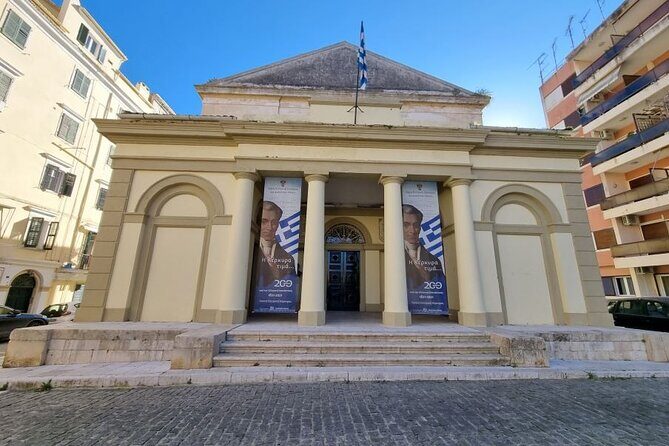
You’ll also see the Palace of Saint Michael and Saint George. Even if you don’t know its full backstory at first glance, the name acts like a clue. Places like this in Corfu often point to periods when outside influence and local administration intersected.
This stop is most useful if you treat it as a “context bridge.” You’ve already seen the fortification logic and the public buildings. Now you connect those to the political and ceremonial sides of Corfu’s layered identity.
If you’re the type who likes to connect the dots later, take a moment here to note what stands nearby—because it helps you when you return on your own after the tour.
Jewish district and synagogue area: one more layer of Corfu’s community history
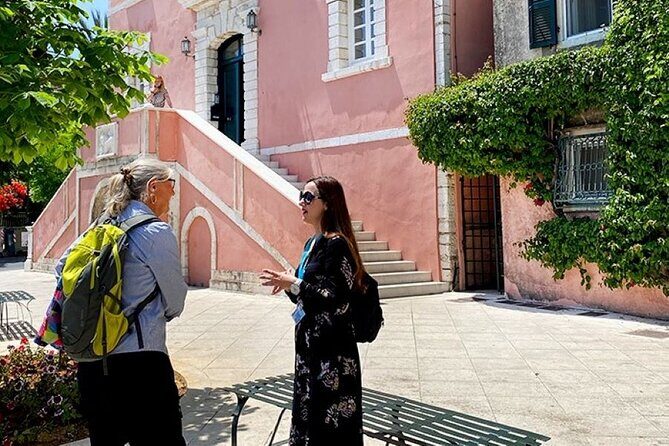
The walk includes the Jewish district and synagogue area. This is a meaningful part of the route because it reminds you that Old Town wasn’t only about grand buildings owned by the most powerful families. It also reflects community life—traditions, neighborhoods, and religious identity built into the city’s fabric.
A guide’s role here is important. Without interpretation, these areas can feel like one more street corner. With context, you understand why it was part of the city’s broader story and how different communities shaped the same streets over time.
If you’re sensitive to respectful visiting, keep your voice low and give the area the kind of attention you’d want if it were your own community’s living space.
The pacing: 2 hours 30 minutes that won’t swallow your whole day
This tour runs about 2 hours 30 minutes, which is ideal for people who want a strong overview but still plan to do other things afterward. Corfu Town has plenty to pair with your walk: café time in the Liston area, a later stroll toward waterfront viewpoints, or even slotting in a museum visit if you find one that fits your interests.
The timing also helps if you’re traveling with mixed interest levels. Even if some stops feel architectural, the guide’s job is to keep them tied to stories of Corfu’s figures and institutions. And because the group is small, the walk doesn’t turn into an awkward shuffle line.
One note for comfort: since it’s a walking tour through old streets, wear shoes you trust. Cobblestones and uneven surfaces are part of the character here.
English on Fridays, German on Mondays: pick the language that fits your trip
The tour is offered in English on Fridays and German on Mondays. That’s a key planning detail. If you’re booking for a different day, check carefully because the language changes based on the schedule.
Also factor in that you’ll want to follow the guide’s explanations in real time. A lot of the value comes from hearing how the guide connects a building to its era and to the important personalities tied to the neighborhood and institutions.
Price and value: $90.36 for a licensed guide in a UNESCO core
At $90.36 per person, this isn’t a budget “just walk around” option. But you’re paying for something that’s hard to replace on your own: a licensed guide focused tightly on Old Town’s most important structures and the stories behind them.
What supports the value:
- Licensed guide included in the price (not an add-on)
- Small group (max 8), which often means more back-and-forth and better attention
- Admission Ticket Free for the walk’s included viewpoints and stops as listed
- Mobile ticket for easier entry
It also helps that the tour is only 2.5 hours. If you were to hire a private guide for the same time in a UNESCO area, the price would usually be much higher.
What you still need to budget separately:
- Meals and refreshments
- Hotel/port transfers (you get to the meeting point on your own)
- Any personal shopping, since souvenir stops may come up during the walk
If your goal is to get your bearings fast and understand what you’re looking at, this price can make sense. If your goal is only to wander casually with no real interest in context, you might feel it’s more than you need.
Who should book this walking tour?
This tour is a great fit if you:
- Want a focused introduction to Corfu Town without spending the whole day
- Like history stories tied to specific places rather than general facts
- Prefer small groups and a guide who can adjust pacing
- Plan to explore the rest of the day on your own afterward
It’s less of a fit if:
- You have limited mobility, since it isn’t recommended
- You need to record video or audio during the tour, since it’s not permitted
Should you book this Old Town tour?
Yes, if you want a smart first look at Corfu Town’s UNESCO center with a licensed guide and a route that hits the big civic, cultural, and community landmarks in about 2.5 hours. The small-group size and story-first approach are especially worth it when you’re trying to understand the city quickly.
Book it with realistic expectations: you’ll walk a lot of historic streets, you’ll cover many highlights, and you’ll still want to come back later to linger on what clicks. If meeting points are stressful for you, arrive early—especially if you’re using cruise shuttle service to get to the Old Fortress gate area.
FAQ
What does the tour include?
It includes a licensed tourist guide. Fees and taxes are included, and the tour uses a mobile ticket.
How long is the tour?
The duration is approximately 2 hours 30 minutes.
Where does the tour meet?
The meeting point is at the Statue of Count Von Der Schulenburg, Agoniston Politechniou, Kerkira 491 00, Greece (near the Gate of the Old Fortress). The tour ends back at the meeting point.
Is the tour available in English?
Yes. It’s offered in English on Fridays and in German on Mondays.
Is there an admission ticket cost?
The tour lists admission ticket free for the experience.
Can I film or record audio during the tour?
No. Video filming and audio recording are not permitted on this tour.
Is this tour refundable if plans change?
Yes. You can cancel for a full refund if you cancel up to 24 hours before the experience’s start time.