REVIEW · CORFU
Small-group Corfu Town Historical Walking Tour
Book on Viator →Operated by Corfu Walking Tours · Bookable on Viator
Corfu Town has a way of pulling you in fast. This 3-hour walk strings together the big landmarks and the street-level details that explain why Corfu looks the way it does.
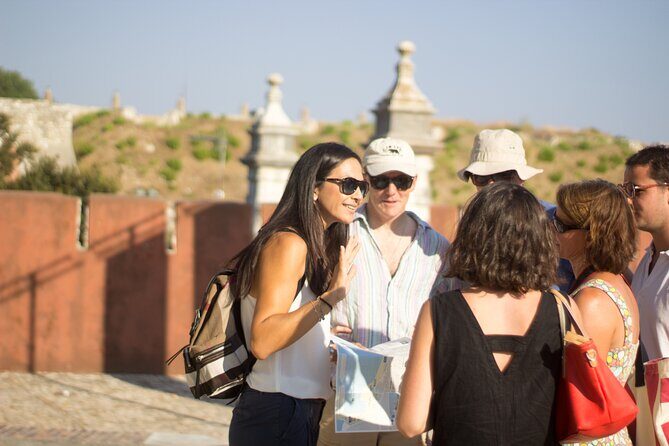
I like that you get a small-group experience with hands-on guide interaction, not a fast shuffle through photos. I also like the mix of powers that shaped the island, from Venetian architecture to British administration, all within a walkable Old Town circuit.
One consideration: it is still a fair amount of walking, and Corfu can be hot in summer, so wear comfortable shoes and plan to pace yourself.
In This Review
- Key things that make this tour work
- Old Fortress entry: where the views start making sense
- Spianada Square and Liston: the town’s social living room
- The Palace of St. Michael and St. George: British rule and Asian Arts inside
- Church of St. Spyridon: the patron saint, Venetian-style architecture, and a crypt
- Town Hall and San Giacomo Theatre: the Venetian neighborhood layers you notice later
- Evraiki Jewish Quarter: street geometry, Venetian influence, and wartime disruption
- Morning or evening departure: how to choose the timing
- Price and value: what $95.86 buys you in real terms
- Who this tour suits best
- Practical tips for a smoother walk in Corfu Town
- Guides you might meet (and why that matters)
- Should you book this Corfu Town Historical Walking Tour?
- FAQ
- How long is the Corfu Town Historical Walking Tour?
- What is the price per person?
- What sights are included?
- Is admission included?
- How big is the group?
- What language is the tour in?
- Where do I meet the guide?
- What time does the tour start?
- Can I cancel for a full refund?
- Is a mobile ticket provided?
Key things that make this tour work
- UNESCO-listed Corfu Town in a tight route so you connect the dots without wasting time
- Old Fortress entry included, with time set aside to actually look around
- Spianada Square and Liston for a clear sense of how the town breathes day to day
- Agios Spyridon Church stop for Venetian-style architecture and the island’s patron-saint story
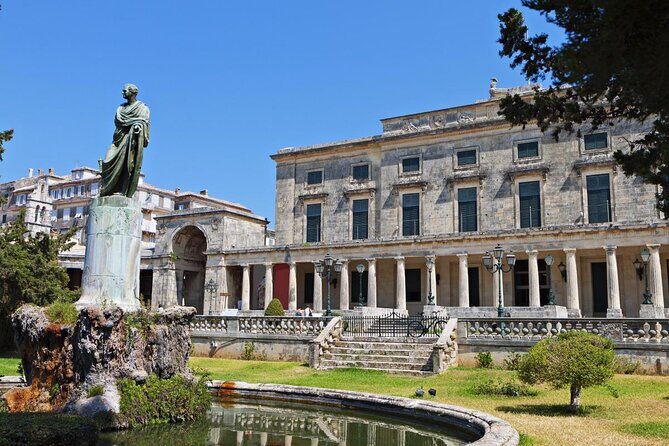
- British-era Palace of St. Michael and St. George plus the Corfu Museum of Asian Arts setting
- Evraiki (Jewish Quarter) context for the layered, sometimes painful, WWII-era marks on the city
Old Fortress entry: where the views start making sense
You begin near the Old Fortress, with your guide meeting you in front of it (at the statue by Schulemburg). After a quick orientation, you enter together. This is a smart start because it gives you a big-picture frame before you get swallowed by narrow lanes.
The fortress visit includes admission, and it lasts about an hour. That matters. Too many walking tours treat big sites like quick photo stops. Here you have time to understand the fortifications and how they relate to the harbor-and-city layout you see around Corfu Town.
Practical tip: go in expecting uneven ground and changing light. Old fortress areas can mean stairs and cobbles, so comfortable shoes are not optional.
More Corfu Old Town Walking Tours


Spianada Square and Liston: the town’s social living room
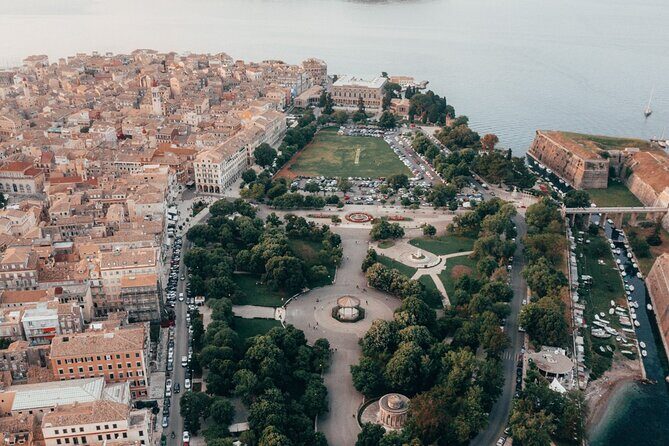
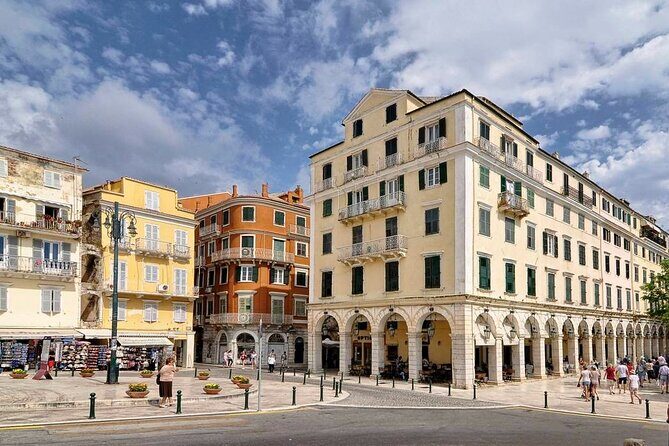
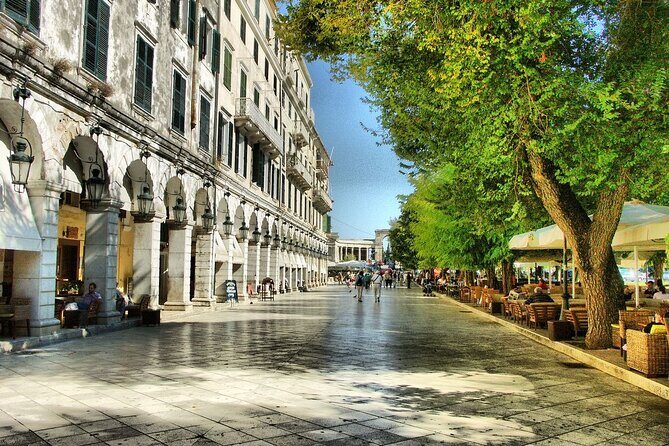
After the fortress, you step into Spianada Square, the town’s central showpiece. The name comes from the Venetian idea of an open flat area, and the square is said to be the largest in the Balkans. Even if you know nothing about Corfu, you’ll feel how important it is because this is where the town gathers.
This stop is short, around 20 minutes, but it’s enough to notice what guide context unlocks. You’ll also pass or see Liston, the arcaded row tied to some of Corfu Town’s best-known cafes and restaurants.
Here’s a detail I’d pay attention to: before the 19th century, it was described as a defensive lot. The French later turned Spianada into a public square. That shift from defense to leisure is basically the whole story of how the city evolved from strategic outpost to everyday destination.
One more fun fact: cricket matches are played on the Esplanade, and it’s noted as the only place in Greece where the sport is played. That’s the kind of detail that makes your later stops click, especially when you learn about the British-era layer too.
The Palace of St. Michael and St. George: British rule and Asian Arts inside
Next comes a building that looks important even before you know what it is: the Palace of St. Michael and St. George. This sits on the northern side of Corfu Town’s historic centre square and is described as the largest major building from the English rule period (1814 to 1864).
You’ll also get the why behind it: it was built at the request of British Lord High Commissioner Sir Thomas Maitland, first as a luxurious residence and also as the administrative headquarters. So you’re not just looking at pretty stone. You’re seeing how power worked on this island.
Today, the palace houses the Corfu Museum of Asian Arts, the only one of its kind in Greece focused on art and antiquities from the Far East and India. It opened in 1928, and its collection is described as about 15,000 works, with rare pieces appearing in international exhibitions.
If you care about art history, this stop gives you a strong pivot. Corfu isn’t only about Venetian facades and church bells. It also has this unexpected, specific museum story tied to a British-era building.
Small drawback to consider: the tour’s time here is limited, so if you want the museum itself in depth, plan to return on your own later.
Church of St. Spyridon: the patron saint, Venetian-style architecture, and a crypt
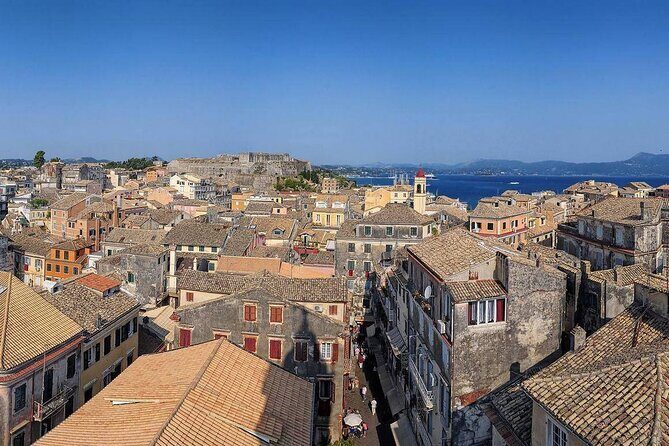
Now you head to the Church of Saint Spyridon, the island’s patron saint and described as a miracle worker. The church was erected in the 16th century, and the architecture is Venetian in feel. Even from outside, the church’s bell tower is the highest point in town and is visible across the Old Town.
This stop lasts about 20 minutes, and it’s timed well. You get enough time to step inside and see the key features without the whole tour turning into a museum day.
Inside, the church has a crypt where the saint’s relics are kept in a double sarcophagus. That’s the kind of detail that can feel surprisingly human: this is not just heritage for tourists. It’s tied to local devotion, and the guide helps you understand why Agios Spyridon is treated as a keeper of the island.
If you’re the type who likes churches but hates long, slow explanations, you’ll probably appreciate the balanced pace here. The stop is focused, and you get the story without getting stuck.
Town Hall and San Giacomo Theatre: the Venetian neighborhood layers you notice later
Walking the narrow streets is half the point on this tour. When you reach the Town Hall area, you’re in a zone that used to be exclusive Venetian neighborhood territory, with opera-house life and villas around it.
You’ll admire the Town Hall building and hear how it changed uses over time:
- it started as a club for noblemen
- then in 1720 it hosted the Noble Theatre of Saint Giacomo of Corfu
- and in 1903 it became the Town Hall
That sequence helps you read the city the way locals do. One building, multiple identities, all still visible if you know what to look for.
Time at this stop is about 15 minutes, so keep expectations realistic. This is a storytelling stop, not a long interior visit.
Other walking tours we've reviewed in Corfu




Evraiki Jewish Quarter: street geometry, Venetian influence, and wartime disruption
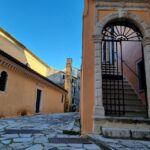
One of the most meaningful parts of the route is the Jewish quarter area, still called Evraiki in Greek. It’s described as the old Venetian ghetto and stretched across the southeast portion of the city, near the Venetian fortifications.
You’ll see the idea of the district as an area built with dense alleyways and multistoried houses, with a Venice-like feeling to it. Then you also learn how WWII changed the urban unity: bombardments disrupted the area’s layout, so what you see today reflects survival and loss as much as it reflects design.
This stop can hit harder than the other landmarks, but it’s also why a guided tour matters. Without context, you might treat the alleys like just another Old Town stretch. With context, you understand the district as history written into street form.
Morning or evening departure: how to choose the timing
The tour offers a choice of morning or evening departure times, which is a big practical win. If you’re arriving from another island activity or you prefer a later stroll, the evening option can help you match your day.
If you’re visiting during hot months, the time of day can change the experience. One of the strongest praises in the feedback is how guides adjusted the pace and worked to keep the group shaded, especially in July heat. That’s the kind of small, human adjustment that turns a tough walking route into something you can enjoy.
If you’re trying to pack in lots of sights on your limited time, this is a solid way to get a foundation fast. It’s about 3 hours, so you still have time left for other Corfu Town wandering afterward.
Price and value: what $95.86 buys you in real terms
The price is $95.86 per person for about 3 hours. That’s not cheap for a walking tour, so here’s how I think about the value.
You’re paying for three things:
- Access to one paid interior stop: the Old Fortress entry is included for that first segment.
- Local guide storytelling: you’re covering the big political eras (Venetian, British, French influences) plus the church and the quarter that marks WWII history.
- Small-group comfort: the tour is capped at 10 travelers, and it’s also described as limited to eight. Either way, you’re less likely to get lost in the back of a crowd.
In short: you’re not just buying walking time. You’re buying guided interpretation, which is what makes Corfu feel understandable instead of just pretty.
Also, the tour is commonly booked about 68 days in advance. If you’re traveling in a peak window, lock it in early.
Who this tour suits best
I think this tour fits best if you:
- want a strong introduction to Corfu Town’s Old Town layout
- enjoy architecture and how political eras leave visible traces
- like asking questions and getting answers in a small group
- can handle being on your feet for roughly 3 hours
It’s also a decent option if you are short on time but want more than a quick highlights loop. One frequent theme from past guide experiences is that the pacing feels relaxing while still thorough.
A word to families: if you’re bringing teens, expect that some may find the historical flow less gripping than the street wandering. If that describes your group, consider splitting duties or adding a shorter self-guided break.
Practical tips for a smoother walk in Corfu Town
- Bring comfy shoes. Old Town can mean uneven surfaces and lots of steps.
- Dress for heat. One of the best-noted guide strengths is adjusting for shade when it gets warm.
- Use the mobile ticket. It’s part of the experience setup, and it keeps things efficient.
- Plan to bring curiosity. The stops connect to each other, so if you pay attention at the fortress, you’ll understand the rest faster.
- Get to the meeting point early. The start is listed at 10:00 am and the tour ends back at the meeting point.
Guides you might meet (and why that matters)
Corfu Walking Tours uses local guides, and past groups have included guides named Electra, Ariti, Nausica, Alice (also referenced as Alkistis), and Debbie. What stands out in feedback is not just facts. It’s the personality and the way guides check pace, answer questions, and keep the group comfortable. That’s a big deal on a historical walking tour where attention spans can be tested by heat, terrain, and timing.
Should you book this Corfu Town Historical Walking Tour?
If you want a first meaningful look at Corfu Town, I’d book it. The route is tight, the stories connect political eras to specific streets and buildings, and you get one real paid site (Old Fortress) rather than a parade of look-but-don’t-enter stops.
Skip it or reconsider if you:
- hate walking and would rather do one museum-heavy day
- want total museum depth inside the palace rather than a guided exterior/interior-or-context stop
- are traveling with people who are likely to tune out when history gets detailed
For most visitors, this feels like a smart use of 3 hours: enough time to learn the city and still have energy left to wander on your own afterward.
FAQ
How long is the Corfu Town Historical Walking Tour?
It runs for about 3 hours.
What is the price per person?
The price is $95.86 per person.
What sights are included?
You visit the Old Fortress of Corfu, Spianada Square, the Palace of St. Michael and St. George (the building tied to the Corfu Museum of Asian Arts), the Church of Saint Spyridon, and you also pass through the area of the Jewish quarter (Evraiki) and the Town Hall/San Giacomo Theatre area.
Is admission included?
Admission is included for the Old Fortress stop. Spianada Square, the Church of Saint Spyridon, and the Town Hall/San Giacomo Theatre area are listed as free.
How big is the group?
The tour is described as small-group, with a maximum of 10 travelers, and it’s also described as limited to eight.
What language is the tour in?
The tour is offered in English.
Where do I meet the guide?
The meeting point is Agoniston Politechniou, Kerkira 491 00, Greece.
What time does the tour start?
A start time of 10:00 am is listed, and the tour also offers a choice of morning or evening departure times.
Can I cancel for a full refund?
Yes. You can cancel up to 24 hours in advance of the experience start time for a full refund.
Is a mobile ticket provided?
Yes, the tour includes a mobile ticket.