REVIEW · CORFU
Corfu: Small Group City Walking Tour
Book on GetYourGuide →Operated by Corfu Perspectives Guided Tours · Bookable on GetYourGuide
Corfu Old Town moves fast, but this tour helps you see it. You’ll get a small-group stroll through the UNESCO-listed streets, with old-town architecture as your main storyline. My favorite part is the local-eye guidance that turns pretty facades into context; the only real trade-off is that it’s a long walk on cobbles, so you’ll want solid shoes.
I especially like the way the route mixes major sights with calmer corners. You start at the Old Fortress Gate area near Schulenburg’s statue, then you work your way through key buildings like the Neoclassical Palace of St. Michael and St. George and the Episcopal Church of San Giacomo. The other consideration: this is a walking tour, not a museum day, so you won’t get ticketed indoor time.
You’re also not stuck with a huge crowd. It’s limited to up to 8 people, and the guide speaks German and English in a live format, which makes it easier to ask questions. When the group size shrinks, it still runs, so you’re not paying to chase a meeting-point miracle.
In This Review
- Key highlights worth your time
- Finding your guide at the Old Fortress Gate
- Esplanade and Liston Arcade: the smart first “orientation” stop
- Old 14th-century fortress: the past you can picture
- Neoclassical Palace of St. Michael and St. George: architecture with purpose
- Dimarcheion and San Giacomo: seeing the city’s layers
- Campiello: walking into the oldest neighbourhood feel
- Ending in Corfu-town: browse local treats on foot
- Price and value: what $82 buys in a 2-hour small-group walk
- Pacing, rules, and what to bring for cobbled Corfu
- Who this Corfu Old Town walk suits best
- Should you book this Corfu Perspectives small-group tour?
- FAQ
- What is the duration of the Corfu Old Town walking tour?
- How many people are in the small group?
- Where do I meet the guide?
- What languages are the guided tours offered in?
- Is the $82 price a guided experience or just a self-walk route?
- What is not included in the tour?
- Are video or audio recordings allowed?
- What should I bring for the walk?
- Is this tour suitable for people with mobility impairments or wheelchair users?
- Can I cancel for a refund?
Key highlights worth your time
- Old Town orientation: you begin by grounding yourself at the Esplanade and Liston before heading deeper into the historic core
- Real small-group feel: up to 8 people means you can actually hear the guide and keep your bearings
- Landmark mix: you’ll see major architectural “bookmarks” like the palace, Dimarcheion, and San Giacomo
- Campiello experience: you end up in the oldest neighbourhood, where the streets feel like a different pace of life
- Local food browsing: the finish in Corfu-town puts kumquat and Corfiot olive oil front and center
Finding your guide at the Old Fortress Gate
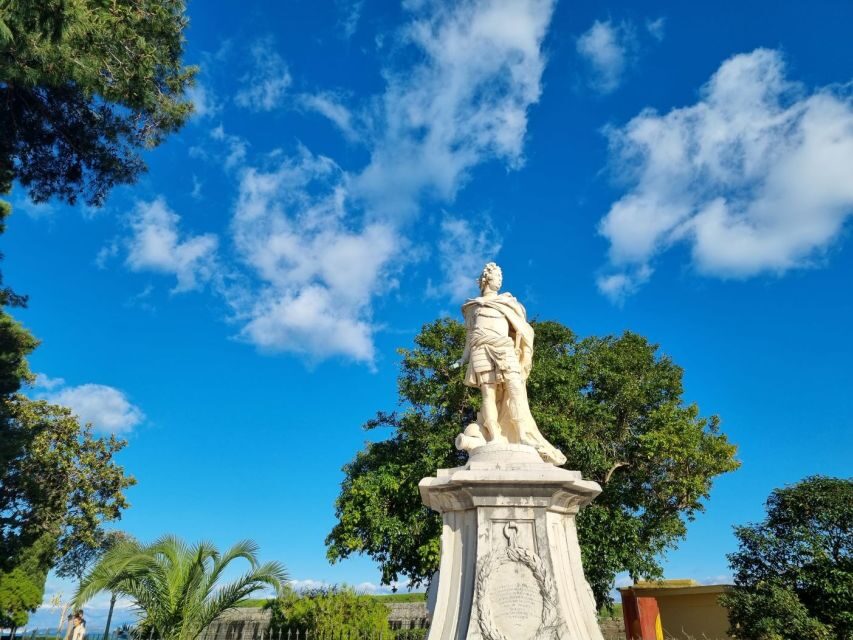
Your tour starts at a clear, landmark meeting spot: the Old Fortress Gate in front of Schulenburg’s statue. The guide holds a lollipop sign with the agency logo, which is a smart choice because you don’t waste the first 10 minutes playing guessing games.
In the real world, this matters. Corfu Old Town can feel like a maze if you arrive without a plan. Starting here gives you a reference point and a logical direction: you’re not wandering; you’re being led.
You’ll also want to arrive a bit early. With cobbled streets and narrow lanes, getting everyone lined up and moving smoothly is part of the experience.
More Corfu Old Town Walking Tours


Esplanade and Liston Arcade: the smart first “orientation” stop
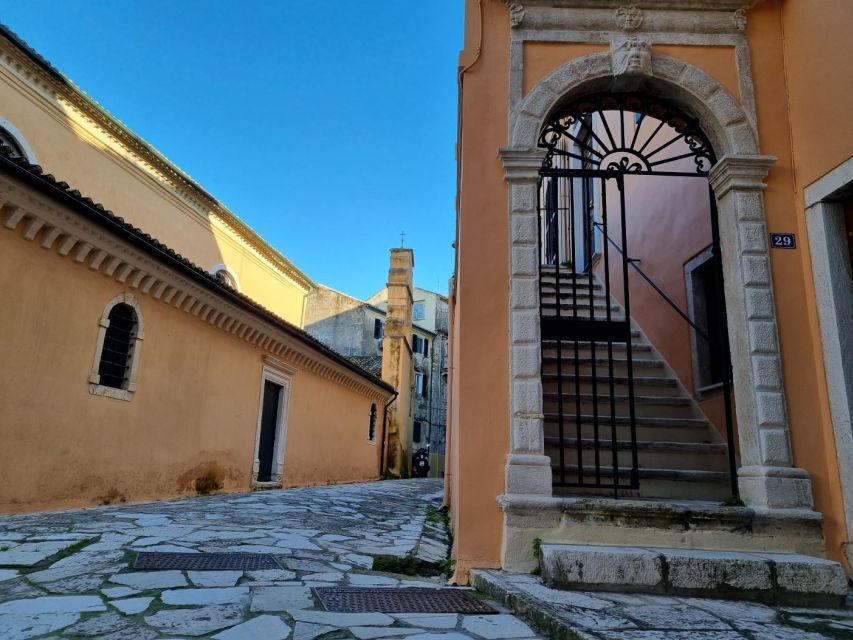
The tour begins with a visit to the Esplanade and the Liston arcade gallery. This is a great opener because it’s not just pretty—it helps you understand how the old town “organizes” itself around public space.
Liston’s arcaded setting is built for watching people and noticing details. You’ll see cafés and bars clustered around the area, which makes it a practical place to get your bearings without committing to any indoor visit. If you’re the type who wants to know where you are before you start walking deeper, this first stop is doing real work for you.
A small practical note: it can be sunny and exposed, depending on the time of day. Bring sunscreen and plan for shade breaks. (This is one of those tours where sun protection isn’t optional if you’re out in the open.)
Old 14th-century fortress: the past you can picture
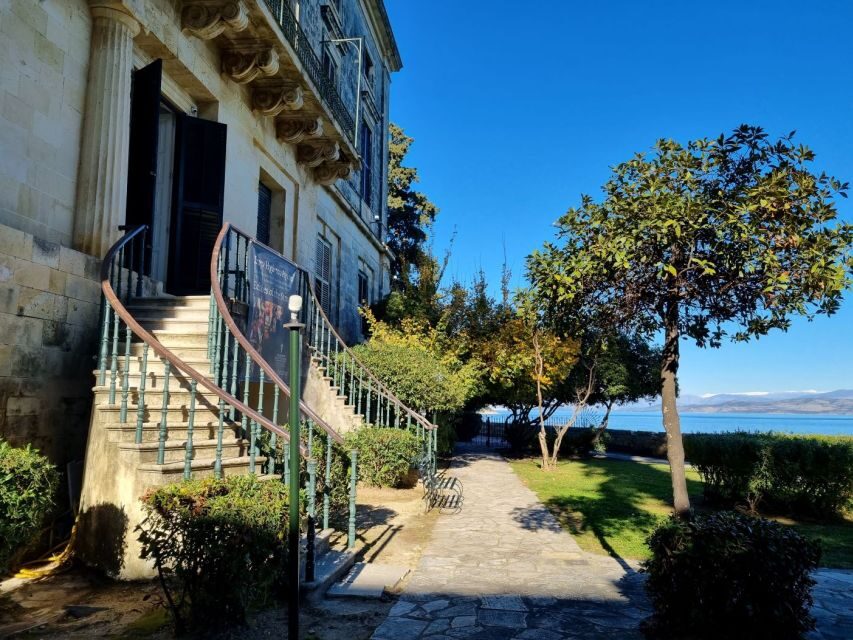
Next comes the old 14th-century fortress area, where you learn more about Corfu’s past. Even if you’re not a “facts person,” this works because you’re standing in a place that gives the story physical shape.
I like this segment because it links visual cues to meaning. When you’re later looking at historic architecture, you’ll remember what the guide said about how the city developed and why certain structures show up where they do.
Also, because it’s outdoors, you don’t need museum hours to get value. You’re not paying for a ticketed experience—you’re paying for context, pacing, and direction.
The possible drawback is that fortress viewpoints can be uneven. It’s still a walking tour, and you’ll be on cobbles and irregular ground, so slow down and keep your balance.
Neoclassical Palace of St. Michael and St. George: architecture with purpose
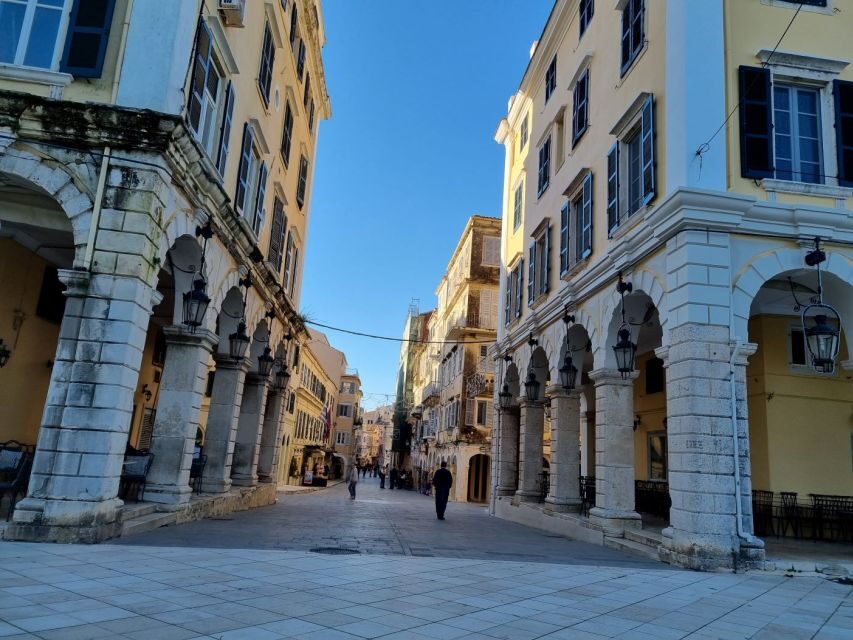
After the fortress context, the tour moves through key city landmarks, including the Neoclassical Palace of St. Michael and St. George. Neoclassical can sound like a style label until someone points out what to look for. Here, the guide helps you see the building as more than a pretty exterior.
This stop is valuable because it broadens the tour beyond one single “era look.” You start with the old town feel, then you get a different architectural mood. That shift helps you avoid the common trap of seeing Corfu Old Town as one uniform aesthetic.
If you like photographing facades, this is one of your moments. Just remember the tour rules: no video or audio recording. Still, you can take photos like a normal person with a camera.
Dimarcheion and San Giacomo: seeing the city’s layers

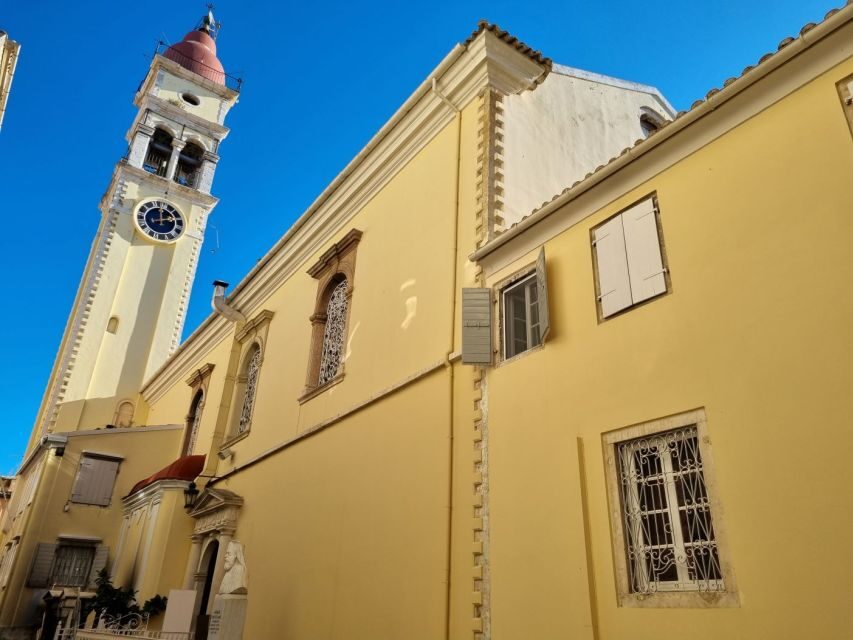
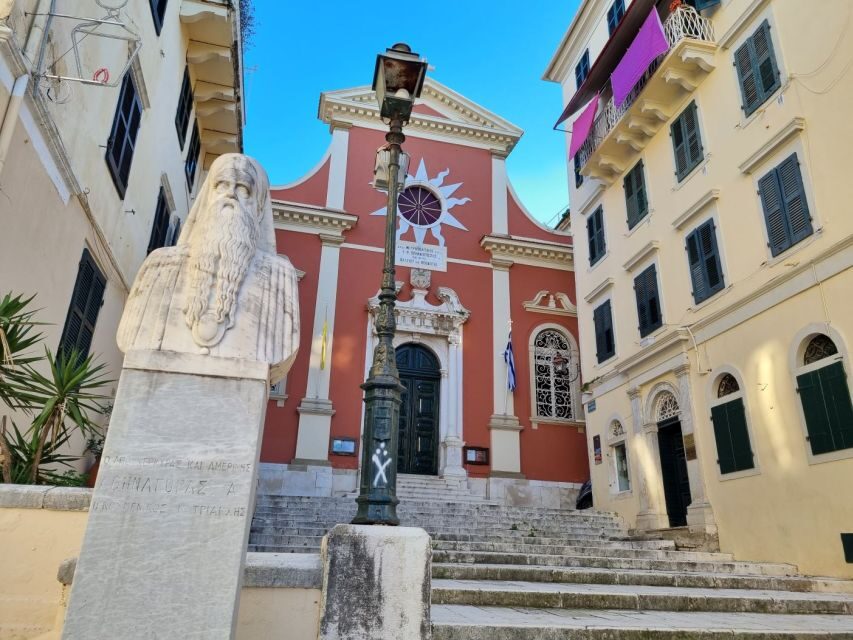
The itinerary continues to the Dimarcheion and the Episcopal Church of San Giacomo. These are the kinds of stops that make a guided tour worth paying for. Without a guide, you might walk past and register them as “a building.” With commentary, you start noticing the details and the role they play in the city.
This is also where you benefit most from the guide speaking German or English and being able to answer questions on the move. In small groups, the guide can actually adjust. I’ve seen this kind of tour shine when there’s room to ask follow-ups—because you’re not shouting over 30 strangers.
From my perspective, these stops work because they keep your attention on how Corfu’s public and religious architecture fits into daily life. You’re not treating the old town like a museum hallway. You’re treating it like a living city with historic landmarks.
Other walking tours we've reviewed in Corfu





Campiello: walking into the oldest neighbourhood feel
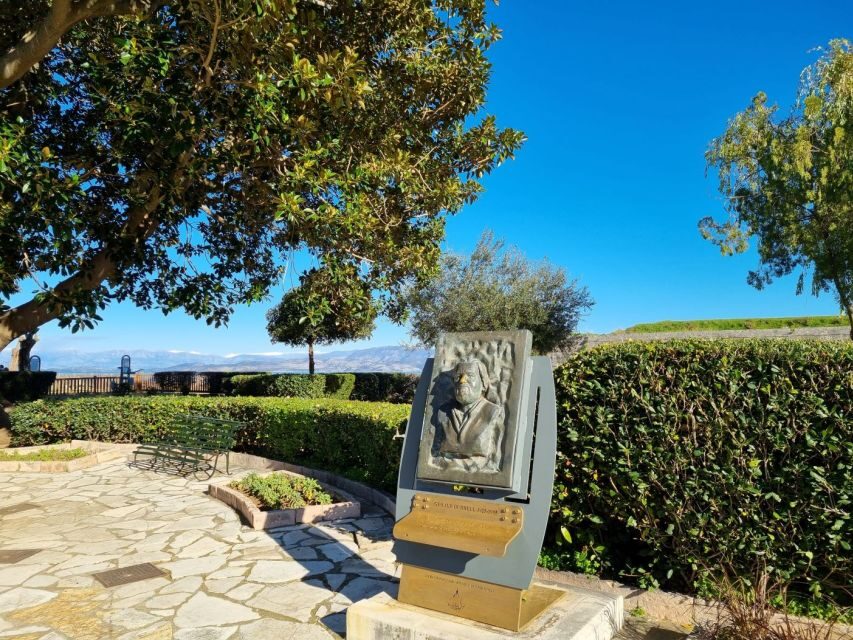
Then you move onto Campiello, described as the oldest neighbourhood on the island. This is often the emotional peak of an old town walk: the streets narrow, the vibe changes, and the city feels more intimate.
Campiello is where the UNESCO “old town” label becomes more than a slogan. You start to see how the streets and the buildings support each other—how the layout encourages slow strolling and how the architecture carries memory.
Practical reality check: oldest neighbourhoods tend to mean the hardest footing. Keep your steps tidy on cobbles, and don’t expect wheelchair-friendly routes (this tour isn’t suitable for wheelchair users). If you’re steady on your feet, you’ll enjoy it. If not, plan for extra care.
Ending in Corfu-town: browse local treats on foot
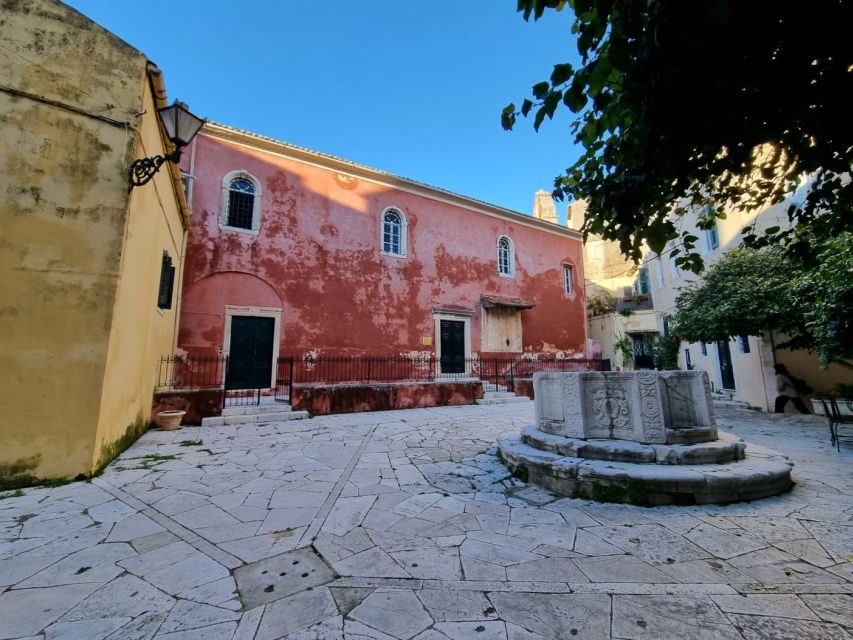
After a day’s worth of sight-seeing packed into two hours, the tour finishes in Corfu-town. This last stretch is a smart payoff: you’re dropped near the busy streets where you can slow down and wander.
You’ll also pass stalls, shops, and tavernas where local delicacies show up—kumquat and Corfiot olive oil are specifically highlighted. I like this finish because it connects sightseeing to simple, edible souvenirs. You’re not forced to buy anything, but you’re given a direction for what to look for when you want something local to take home.
If you’re hungry, this is your moment. If you’re not, it still works—you can plan a later snack stop without spending extra time searching.
Price and value: what $82 buys in a 2-hour small-group walk
At $82 per person for a 2-hour walking tour, you’re paying for three things: a live guide, a small group, and guided route time through the historic core. The fact that fees and taxes (24%) are included makes the price feel more straightforward than tours that nickle-and-dime you.
Is it “cheap”? No. But value here is about quality of attention. When a tour is limited to 8 people, you’re not competing for sound, and the guide can keep the explanation focused. That matters especially in dense old towns where getting lost costs you time.
Also, the tour doesn’t include museum visits or fortress entry tickets. That’s a good thing for travelers who prefer exterior architecture and street-level context over lining up. If you want inside museum content, you’ll need a separate plan—but for getting grounded quickly, this tour is good value.
Finally, the reviews’ standout theme is that the guide delivers serious passion and clarity. One guide name that came up clearly is Efi, praised for connecting different periods of Corfu through architecture and notable people. That’s the kind of guiding you want when you’re paying for interpretation, not just walking.
Pacing, rules, and what to bring for cobbled Corfu
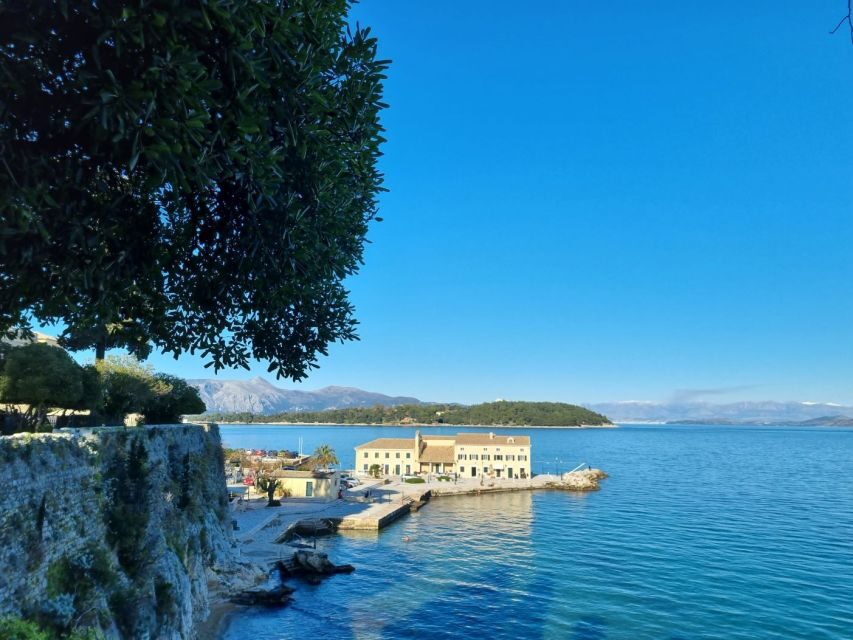
This is a long walk through cobbled streets, so your comfort gear is your best purchase of the day. Bring comfortable shoes, plus a sun hat, sunscreen, and water. Even if the weather looks mild, you’ll likely be outside enough that sun and dehydration can sneak up on you.
Weather-appropriate clothing is also worth it. Corfu’s street walking can mean quick changes, especially if you start in one light and end in another.
Tour rules are simple: no video recording and no audio recording. The goal is to keep the experience smooth for everyone, including the guide and the group.
And then there’s the human factor. This tour is not suitable for people with mobility impairments, heart problems, wheelchair users, and children under 3. If any of those apply to you, it’s best to look for a gentler option with fewer cobbles and less walking time.
Who this Corfu Old Town walk suits best
This tour is ideal when you want three things at once: orientation, architecture, and a local perspective. If it’s your first time in Corfu Old Town, you’ll benefit because the route builds from public spaces (Esplanade and Liston) into deeper historic streets (fortress area, landmark buildings, then Campiello).
It’s also a solid pick for people who dislike huge groups. The small-group format keeps the vibe friendly and lets the guide adapt to questions. It’s especially reassuring that the tour can still run even when the group becomes very small, so you’re less likely to feel like you’re paying for an uncertain schedule.
If you love photography and want a guided route that points out what to notice, this fits. If you want a museum marathon or indoor exhibits, you’ll need extra plans.
Should you book this Corfu Perspectives small-group tour?
I’d book it if your top priority is understanding Corfu Old Town fast, without losing an afternoon to guesswork. The combination of the starting point at the Old Fortress Gate, the landmark sequence (Liston, fortress area, Neoclassical palace, Dimarcheion, San Giacomo), and the finish near Corfu-town food browsing is a practical route that feels designed for real visitors.
I wouldn’t book it if you struggle with cobblestones or you’re looking for ticketed museum time. Also, if you prefer unguided wandering with zero structure, you may find a guided route a bit more “guided” than you like.
For the right traveler, though, this is a smart use of two hours. You get the small-group attention, a guide who can connect buildings to meaning, and a walk that ends with easy local browsing for kumquat and Corfiot olive oil.
FAQ
What is the duration of the Corfu Old Town walking tour?
The tour lasts 2 hours.
How many people are in the small group?
The group is limited to a maximum of 8 participants.
Where do I meet the guide?
Meet at the Old Fortress Gate in front of Schulenburg’s statue. The guide holds a lollipop sign with the agency’s logo.
What languages are the guided tours offered in?
The live tour guide is available in German and English.
Is the $82 price a guided experience or just a self-walk route?
It’s a guided walking tour with a professional guide. The price includes fees and taxes (24%).
What is not included in the tour?
Museum visits, fortress visits (tickets/entry), pickup and drop-off, and drinks are not included.
Are video or audio recordings allowed?
No. Video recording and audio recording are not allowed.
What should I bring for the walk?
Bring comfortable shoes, a sun hat, sunscreen, and water, plus weather-appropriate clothing.
Is this tour suitable for people with mobility impairments or wheelchair users?
No. It is not suitable for people with mobility impairments or for wheelchair users.
Can I cancel for a refund?
Yes. Free cancellation is available up to 24 hours in advance for a full refund.