REVIEW · CORFU
Stories of Food and Culture in the Old Town of Corfu
Book on Viator →Operated by Corfuting · Bookable on Viator
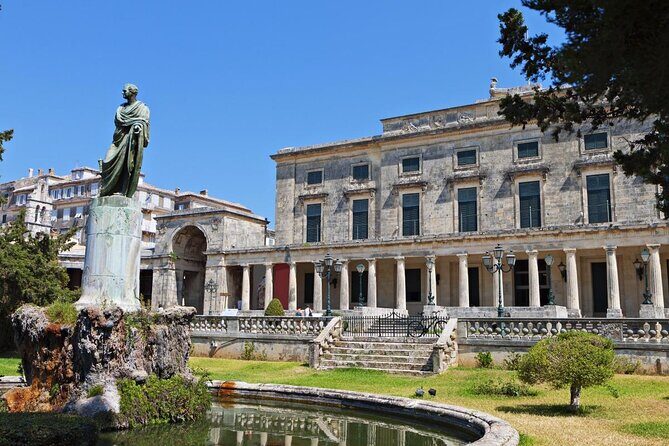
Corfu tastes better with stories attached. This 3.5-hour Old Town walk pairs food with culture, hopping between major sights and the everyday side of the island. You’ll hit the Palace-area setting of the Corfu Museum of Asian Art, stroll the famed Liston, and work through the religious and fortress viewpoints that shape how locals see their city.
I like two big things right away. First, the tasting: Greek yogurt, local liqueur, local sweets, then a main of pita gyros or souvlaki, and finish with gelato. Second, the way the guide ties those bites to place—British-era details show up around the Palace of Saint George and Archangel Michael, and the customs lesson is anchored at Holy Church of Saint Spyridon.
One caution: this is a walking-focused experience with lots of time outside famous landmarks. If you want museums inside at every stop, or you’re not a fan of warm weather walking, plan your timing and wear shoes you trust—most of the day is spent on the streets and steps.
In This Review
- Key highlights I’d put on your radar
- Why this Corfu Old Town tour works: food plus real context
- From the Museum of Asian Art area to Liston: the first two stops set the tone
- The Old Fortress and St. Spyridon: history through views and customs
- Corfu Old Town monuments: the long middle that ties it together
- Food stops that actually feel like Corfu: yogurt, liqueur, gyros or souvlaki, gelato
- Guides and conversation: why small-group energy matters
- Group size, walking pace, and comfort on real Corfu streets
- Price and value: is $132.53 a good deal?
- Timing, weather, and how to plan your day
- Who should book this tour, and who might skip it
- Should you book this Corfu food and culture walk?
- FAQ
- How long is the tour?
- Where does the tour start?
- Is the tour offered in English?
- What food is included in the tasting?
- Are admissions included for the stops?
- How many people are in the group?
- Is the ticket mobile?
- Is the meeting area near public transportation, and can service animals join?
- What’s the cancellation policy if weather is bad?
Key highlights I’d put on your radar
- A 3.5-hour Old Town loop built for first-timers who want order without feeling rushed
- Food that’s more than snacks, including a full main (gyros or souvlaki) plus liqueur and gelato
- Iconic Corfu sights from the outside, including St. Spyridon and the fortress viewpoints
- Small groups (max 15 people), which makes questions and conversation easier
- Local guide storytelling, with names like Athena, Kate, Sophia, and Magda showing up in feedback
Why this Corfu Old Town tour works: food plus real context

If you’ve ever wandered a historic Old Town and thought, I get the photos, but what does it actually mean, this tour is a smart fix. Corfu’s Old Town can feel layered—Venetian shapes outside, Greek life underneath, and British influence showing up more than you’d expect. This experience stitches those layers together while you eat, so you’re not just looking at buildings. You’re learning how people used to live here, and how they live here now.
The tastings aren’t treated like an afterthought. You’re guided through the neighborhood at a pace that lets you pay attention. That matters in Corfu Old Town, where streets can be narrow, turns can come fast, and it’s easy to lose your bearings. I like that you get “why” with “what”—not just where to stand for a view, but why that place matters.
There’s also a practical feel to the tour. It runs in English, uses a mobile ticket, and keeps the group small. That combination usually means fewer stalls, fewer language problems, and a calmer vibe than the big group scramble tours.
More Corfu Old Town Walking Tours

From the Museum of Asian Art area to Liston: the first two stops set the tone

You start at a statue of Count Von Der Schulenburg on Agoniston Politechniou. From there, the day kicks off around the Palace of Saint George and Archangel Michael, which now houses the Corfu Museum of Asian Art. The twist here is that you’re not rushing straight into a museum experience. You’re standing outside an impressive palace setting and learning about British Corfu—how the island was shaped by outside power, and how that shows up in the city.
This “outside-first” approach is a plus for many visitors. You get the big visual frame early—palace architecture, city atmosphere—then the story gives it weight. It’s also a nice way to avoid spending your limited time on ticket lines or deep museum rooms.
Next comes the Liston, the famous pedestrian street people walk for a reason. Even if you’ve seen photos, it’s different in person: street rhythm, the feeling of space in the middle of an old city, and the sense of a place designed for strolling and watching. This is where the tour shifts from background context into how you actually move through Corfu Old Town.
You’ll likely appreciate these first sections if you like structure. They help you understand the city’s “spine” before you start bouncing between landmarks.
The Old Fortress and St. Spyridon: history through views and customs
After Liston, you move into the Old Fortress area for an introduction to Corfu history and culture. The fortress story is usually where the city stops being just pretty. You start thinking about protection, power, and why the island keeps attracting attention. It’s the kind of lesson that makes later sights click, because you’ll start noticing the military logic in the layout and the way sight lines matter.
Then the tour brings you to Holy Church of Saint Spyridon, which is described as the most important church in Corfu. You’ll stand outside and learn about religious customs tied to the island. This is important because it changes how you read the architecture. You’re not looking at a landmark only as a postcard. You’re learning what it represents in daily life and local tradition.
One practical point: religious and historical stops mean you may want to dress respectfully and be mindful of how you behave in front of sacred spaces. The tour won’t turn into a formal ceremony, but the setting is serious to locals.
Corfu Old Town monuments: the long middle that ties it together
The final stretch is a walking guided tour through the most important monuments in Corfu Old Town, and it takes about 1 hour 30 minutes. This is where the guide’s storytelling style really matters. A good guide doesn’t just name buildings—they connect them to a pattern: what changed, what stayed, and what locals value.
This is also the part where you start to feel the advantage of a small group (max 15). You can ask questions without the whole pace slowing. If you’re the type who wants context—why one street feels different, why one church matters more than another—you’ll benefit from the slower, human scale.
Most people finish this section with a stronger sense of how the Old Town is organized. Not in a map-chart way, but in a you-can-walk-here-again way. That’s usually what you want from a guided walk: not dependence, but confidence.
Food stops that actually feel like Corfu: yogurt, liqueur, gyros or souvlaki, gelato

This is a “tour, talk and taste” setup, and the menu backs it up. You’ll have starters like Greek yogurt, local liqueur, and local sweets. Then you get a main choice of pita gyros or souvlaki, and finish with ice cream gelato.
What I like about this mix is the balance. Greek yogurt isn’t just a random starter—it’s familiar enough that you can focus on how it’s done well locally. The local liqueur adds that culture-specific touch, and the sweets and gelato keep the day from feeling heavy.
Another value point: a main like gyros or souvlaki is filling. So even though the tour is only about 3 hours 30 minutes, it often covers a meal-level part of your day. You won’t leave thinking you still need to hunt for food in a crowded tourist pocket.
A small tip that comes up in feedback: try not to eat a big breakfast right before. If you do, you’ll feel stuffed before you even reach the main and dessert. I’d rather you arrive with an appetite and a plan for shade and water.
More Cooking Classes & Food Tours in Corfu



Guides and conversation: why small-group energy matters
The guide is the difference between a list of stops and a real experience. In the feedback, guides such as Athena, Kate, Sophia, and Magda stand out for being welcoming and conversation-driven. That matters because Corfu’s stories aren’t just facts. They’re explanations—how the island’s layers connect, how customs shape daily life, and how locals think about visitors.
You’ll also likely feel the difference in pace. People mention not being rushed and having enough moments to rest, even on hot days. That’s not a guarantee for every day, but it’s a good sign: the tour isn’t set up like a sprint where you swallow information while walking.
If you like asking questions—about religion, architecture, or why British influence shows up in unexpected places—this format makes it easy to get answers without awkwardness.
Group size, walking pace, and comfort on real Corfu streets
With a maximum of 15 travelers, you get a much more personal tour than the giant bus crowd. That typically means the guide can slow down for your questions, and you can stay together without feeling like herding animals.
Still, it’s a walking experience. Expect cobblestones and curving Old Town streets. If you have any foot issues, this is the biggest trade-off. Plan for comfortable shoes and water. Also, if you’re visiting during a warmer season, treat the day like a timing game—start early, take breaks when you can, and don’t plan another long excursion right after.
If you’re coming from a cruise port, the tour is described as easy to reach by taxi, with taxis available at the port, and it’s also near public transportation. That makes it simpler than the tours that require a long transfer across town.
Price and value: is $132.53 a good deal?
At $132.53 per person, you’re paying for three things at once: a guided walk through major Old Town landmarks, cultural storytelling tied to specific sites, and a structured food program.
Here’s how the value adds up:
- You get about 3.5 hours of guidance through key Corfu locations rather than just “walk around and eat.”
- You receive multiple tasting components: yogurt, sweets, local liqueur, a main (gyros or souvlaki), and gelato.
- The experience notes that admissions for the listed stops are free.
So you’re not just buying a ticket and hoping your food stop lines up with meal time. You’re also not paying extra entrance fees for the sights named in the route.
Could it be pricey if you only wanted a casual stroll and a snack? Sure. But if you want history and culture paired directly with what you taste, the cost starts to make sense.
Timing, weather, and how to plan your day
This tour needs good weather. If it’s canceled due to poor weather, you’ll be offered a different date or a full refund. Like many Old Town walking tours, rain can change the whole feel and safety.
Booking-wise, you’ll get confirmation at the time of booking, and the ticket is mobile. Average booking is about 76 days in advance, which is a sign this sells out in popular periods—so if your dates are fixed, it’s smart to lock it in early.
Also: it ends back at the meeting point. That’s handy. You don’t have to solve a “how do I get home” puzzle mid-tour.
Who should book this tour, and who might skip it
You should book if:
- You’re visiting Corfu Old Town for the first time and want a guided path that makes the city make sense.
- You like food tours that include a real main, not just crumbs.
- You enjoy questions and conversation as part of your travel style.
- You want a small group (max 15) instead of a rushed crowd.
You might skip if:
- You’re looking for a deep museum day with lots of interior time.
- You hate walking and steep focus on street-level landmarks.
- You’re only interested in pure beach time or a low-effort day.
Should you book this Corfu food and culture walk?
Yes, if your goal is to leave Corfu Old Town feeling oriented and fed, not just entertained. This tour is built around a clear rhythm: major sights from the street, context that connects those sights, then tastings that feel genuinely local (yogurt, sweets, liqueur, gyros or souvlaki, gelato).
If you’re deciding between “a quick photo walk” and “a guided understanding,” this leans to understanding. And if you choose the right shoes and come hungry, the food part lands exactly where it should: at the end of the learning, not as a distraction from it.
FAQ
How long is the tour?
It runs about 3 hours 30 minutes.
Where does the tour start?
It starts at the Statue of Count Von Der Schulenburg on Agoniston Politechniou, 491 31, Kerkira 491 00, Greece.
Is the tour offered in English?
Yes. The tour is offered in English.
What food is included in the tasting?
You’ll have Greek yogurt, local liqueur, local sweets, then pita gyros or souvlaki, and gelato (ice cream) for dessert.
Are admissions included for the stops?
The information provided says admission tickets for the listed stops are free.
How many people are in the group?
The maximum group size is 15 travelers.
Is the ticket mobile?
Yes, the tour uses a mobile ticket.
Is the meeting area near public transportation, and can service animals join?
The tour is noted as near public transportation, and service animals are allowed.
What’s the cancellation policy if weather is bad?
The tour requires good weather. If it’s canceled due to poor weather, you’ll be offered a different date or a full refund. Free cancellation is available up to 24 hours in advance.