REVIEW · CORFU
Corfu: Greek Cooking Class & Olive Oil Tasting
Book on GetYourGuide →Operated by Corfu Outdoor & Leisure Activities · Bookable on GetYourGuide
Food brings you closer than maps do. This Corfu day turns market choices into a wood-oven lunch, then tops it off with an olive oil tasting tied to the family’s own trees and press. You’ll also get guided time in Corfu’s old-town corners before you head out to the countryside.
I especially like how personal it feels in a small group (up to 8) and how much you learn without it turning into a lecture—Yorgos and his family explain what you’re eating and why it matters. The only real consideration is logistics: while pickup is optional in several areas, transportation from the shopping area to the countryside home isn’t always included, so you’ll want to plan ahead if you’re driving yourself.
In This Review
- Key things that make this Corfu day feel worth it
- Getting started at Corfu’s old harbor, with a food day mindset
- The old-town walk: fortress views and the Jewish quarter stops
- Corfu market shopping: buying ingredients you’ll taste later
- From food shops to the olive-country home
- The cooking class in a wood oven: what you’ll actually make
- Lunch as a family meal: 5 courses plus local wine or beer
- The olive grove walk and the 200-year-old press ruins
- Olive oil tasting: what you learn matters when you shop later
- Price and value: why $107 works better than it looks
- Who should book (and who might want a different style of day)
- Practical notes you can plan around
- Should you book this Corfu cooking and olive oil experience?
- FAQ
- How long is the cooking class and olive oil tasting?
- How many people are in the group?
- Where do we meet and where does it end?
- What’s included with the price?
- Is hotel pickup available?
- Do I have to cook, or can I watch?
- What dietary restrictions should I tell you?
Key things that make this Corfu day feel worth it
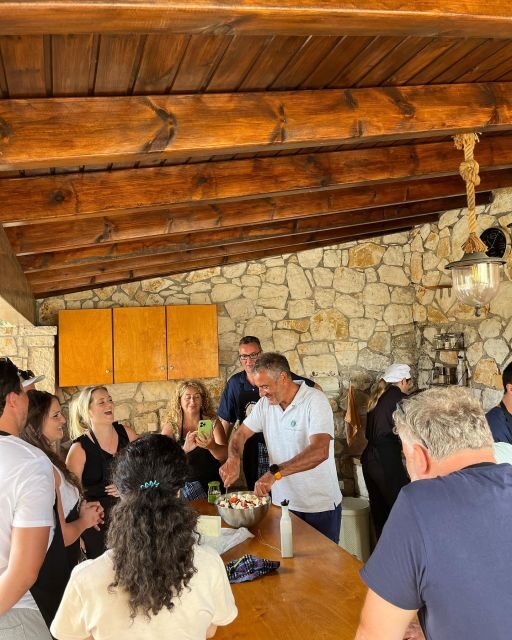
- Market shopping with your host for real ingredients you’ll actually cook with
- Hands-on cooking options (you can cook or watch, depending on your style)
- A family-style 5-course meal with local wine or beer
- 200-year-old olive press ruins plus a walk through the olive grove
- Olive oil tasting that teaches what to look for in the bottle
- A small group cap of 8 for a relaxed, conversational pace
Getting started at Corfu’s old harbor, with a food day mindset
The day begins in Corfu Town at the Old Harbor area, outside the Konstantinoupolis hotel. That matters, because you’re not starting with a bus ride to nowhere—you’re starting in the part of town where food, walking, and stories mix naturally. From there, the focus stays clear: learn what’s local, buy it, cook it, then eat it with the people who grow and make these things.
This isn’t the kind of tour where you just snack and move on. You’re choosing ingredients with Yorgos (George), and he’s there to translate the market atmosphere into practical knowledge. Expect stops that are partly for eating and partly for context, so you understand what you’re tasting as you go.
The total time is about 5 hours, and starting times vary. That short window is great if you don’t want to lose a full day, but it also means you’ll want to show up ready to walk and eat on schedule.
More Olive Oil Tours & Tastings in Corfu
The old-town walk: fortress views and the Jewish quarter stops
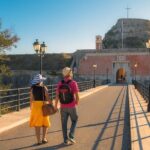
Before you even hit the big food shopping, you get a guided walk through key old-town areas. You’ll pass through Konstantinoupolis and do a photo stop around the New Venetian Fortress area. It’s not a long “stand and stare” moment; it’s more about getting your bearings fast and seeing the shape of Corfu Town from the outside-in.
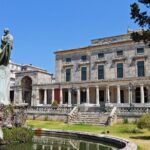
One highlight is a stop connected to the Jewish Synagogue of Corfu and the surrounding neighborhood area. You’ll have time for sightseeing here, and the guide uses these stops to add texture to what you’re seeing—how Corfu changed over time and why certain parts of town look the way they do.
If you like your tours to include both food and place, this old-town pacing hits a good balance. If you hate walking or prefer zero history, you might find these stops a bit too much. But if you’re there for culture that supports the meal, it’s a smart setup.
Corfu market shopping: buying ingredients you’ll taste later
The core of the day starts when you go shopping in and around the Corfu Central Market area. You’ll browse stalls and pick ingredients with your host, including produce that’s described as coming from Corfiot fields shortly before. Your host walks you through what to buy and why, and the goal is simple: use what you choose later in the kitchen.
This market block also comes with little food moments built in. You’ll stop at a local deli shop to try authentic feta cheese, which is a nice “calibration bite.” It tells you what kind of cheese you should expect in the dishes you’ll make—salty, creamy, and very much tied to local tastes.
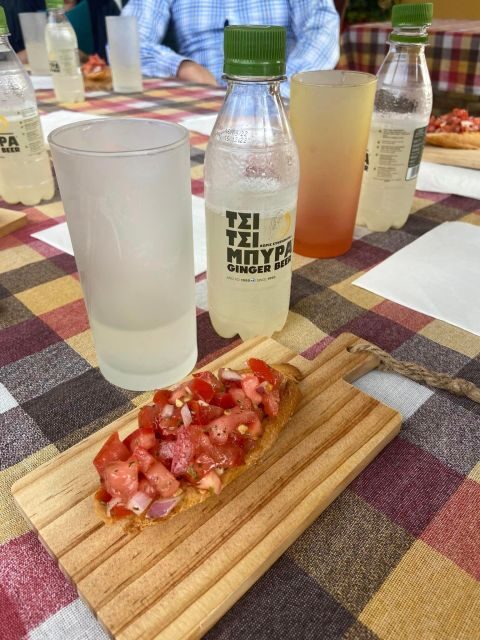
There’s also a strong bread-and-cheese vibe in the welcome and the menu. You’ll get a welcome treat before cooking proper begins—Corfiot ginger beer and freshly baked focaccia bread with tomato, garlic, and olive oil. That’s not just a snack; it sets the theme of the day: simple ingredients done well, with olive oil doing real work.
Practical tip: go with an appetite. Even though you’re not eating a full meal yet, you’ll take a few tasting-style bites. You’ll be ready for lunch by the time the cooking starts.
From food shops to the olive-country home
After the shopping, you head out of Corfu Town toward the countryside. You can drive yourself or use a minivan depending on the option you choose. Hotel pickup and drop-off may be available for several areas, but it’s worth noting that the specific transportation from the shopping area to the home for the cooking classes isn’t always included and can be arranged.
Either way, what you’re trading for is the setting. The kitchen isn’t in a commercial studio. It’s in a country home where you’ll hear the wood-fired cooking approach and see the garden/olive context that ties back to the tasting later.
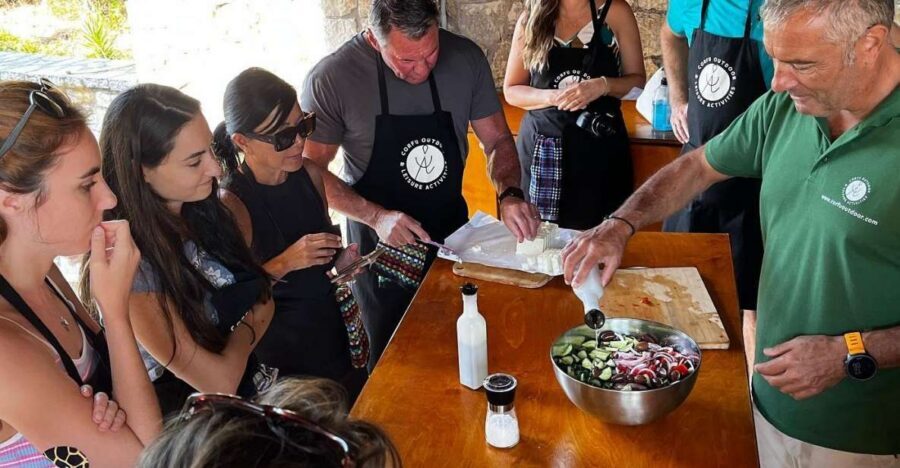
Once you arrive, you’ll transition from market mode into kitchen mode quickly. You’ll meet the chef, get your ingredients and equipment, and then decide your participation level. This tour gives you a real choice: you can be hands-on or watch the cooking prep and still eat the results.
The cooking class in a wood oven: what you’ll actually make
Cooking is the centerpiece, and it’s built around Greek dishes that feel “everyday special” rather than fancy restaurant work. In this home setup, the chef shows you how to prepare the recipes, then you take part—chopping, mixing, assembling, and following the flow of how a family meal comes together.
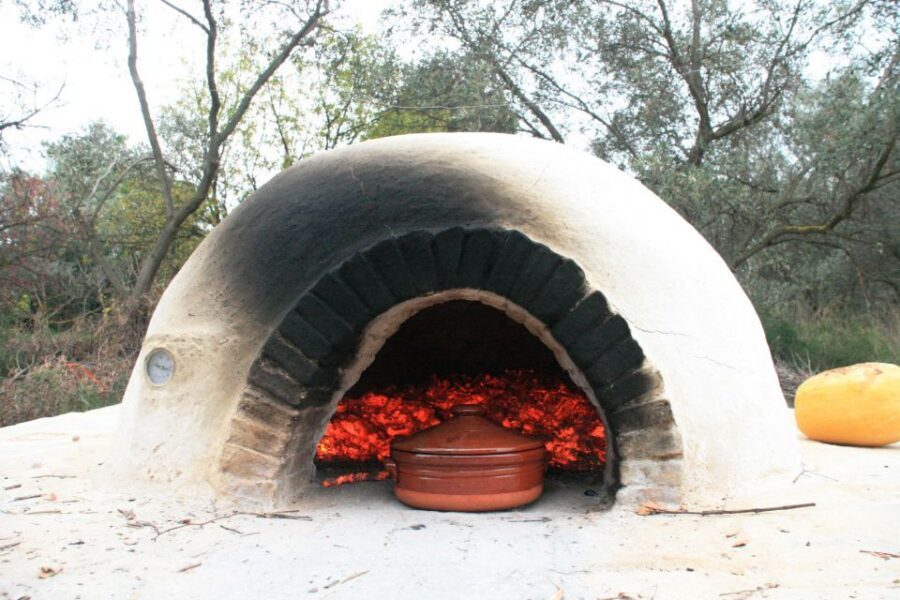
You’ll use a wood oven approach, and that changes the character of the food. Even if you don’t analyze flavors like a chef, you’ll notice what it does: warmth, browning, and that slow-cooked depth that’s hard to fake with modern ovens.
The menu is clearly laid out, so you know what you’re working toward:
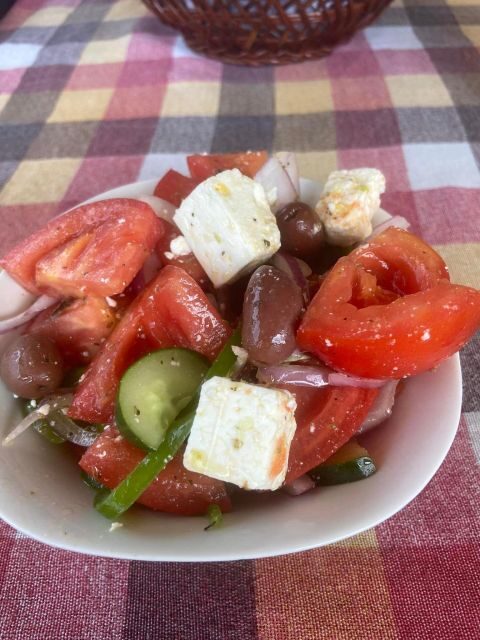
- Greek salad with organic vegetables, feta, and olives
- Tzatziki, made with yogurt, garlic, and cucumber
- Homemade cheese pie with phyllo, feta, herbs, and olive oil
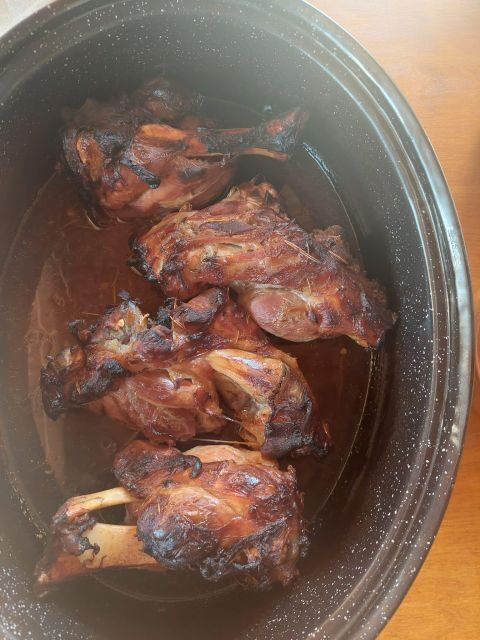
- Pork knuckle marinated with Corfiot beer, honey, mustard, lemon juice, and rosemary, slowly cooked in the wood oven, served with herb-broth potatoes drizzled with olive oil, lemon juice, and parsley
- A seasonal fruit dessert (either baked peaches or baked apples with crushed walnuts, honey, and a honey-wine syrup, served with Greek yogurt)
Whether you’re the cook who loves mess and chopping or the cook who prefers watching, you’ll end up eating what you make, in the same setting where it was prepared.
Diet note: if you have restrictions, the instruction is to inform the team in advance. Since the stated menu includes both cheese dishes and pork, it’s best to flag dietary needs early so they can guide you on options.
More Cooking Classes & Food Tours in Corfu

Lunch as a family meal: 5 courses plus local wine or beer
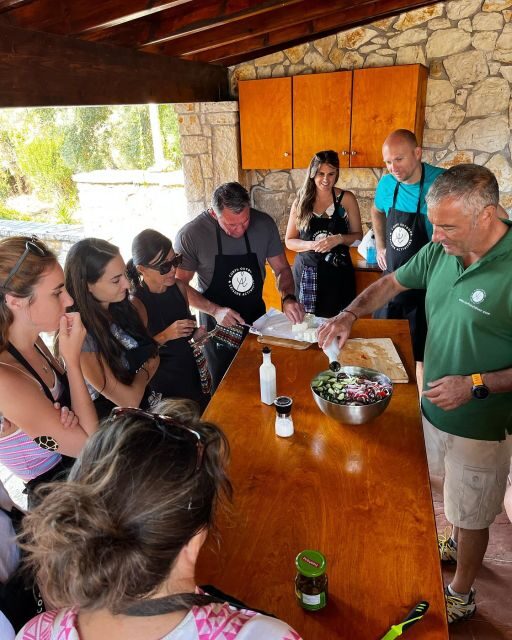
This is one of the biggest value drivers. The class ends with a 5-course meal that includes local wine or beer, plus soft drinks and water. For many cooking classes, you pay for the class and get a small sampling at the end. Here, you get a real meal that matches the effort of the cooking.
The structure also helps you understand the cuisine in layers:
- You start with fresh, cooling flavors like salad and tzatziki.
- You move into baked comfort food with the cheese pie.
- Then comes the wood-oven main—pork knuckle cooked slowly with herb-forward sides.
- You finish with dessert that uses seasonal fruit and walnuts, then balances it with yogurt.
And you don’t eat in a rush. The day is designed for conversation and company. In the countryside setting, the meal feels like the natural continuation of what you just learned—less performance, more sharing.
If you drink alcohol, the wine/beer inclusion makes the “cost per full meal” logic work in your favor. If you don’t drink, you still get soft drinks and water, but you should expect that the drink experience is part of the hospitality vibe.
The olive grove walk and the 200-year-old press ruins
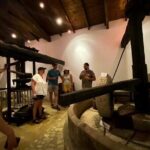
After (or near) the cooking portion, you’ll walk the family’s olive grove and visit the ruins of a 200-year-old olive press. This isn’t a generic stop with a few photos and a quick story. It’s tied directly to the tasting, so you’re learning a production story, not just buying a product.
The olive press ruins add physical context. You can see how old equipment shapes new realities—what grinding and pressing used to require, and how that history connects to modern olive oil flavor. Then you’re in the olive grove, which matters because it reminds you that oil isn’t a factory product. It starts with trees and seasons.
This is also a smart pacing choice. Visiting the press and grove is the kind of thing that increases appetite before lunch, because it connects your senses—smell, walking, and the idea of oil moving from fruit to bottle.
Olive oil tasting: what you learn matters when you shop later
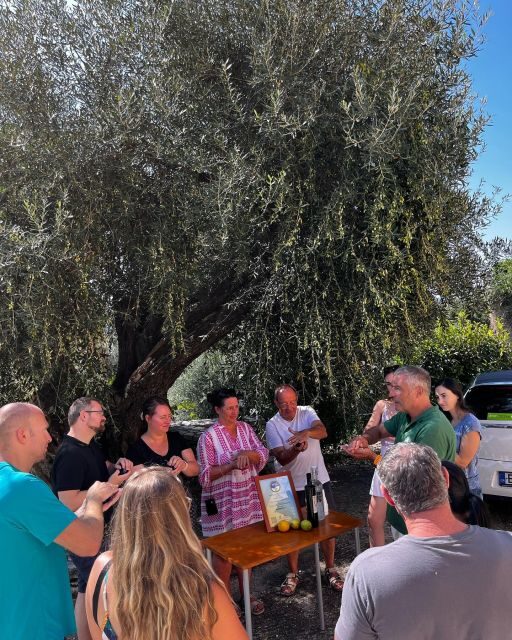
The olive oil tasting is the day’s “use it later” feature. You taste and compare, and you learn what to pay attention to in olive oil—so you can move beyond buying based on the label.
The guide’s framing is that this oil is “liquid yellow gold,” but the real value is the identification practice. You’ll learn enough to notice differences in character and quality rather than treating olive oil like a generic pantry item.
And there’s a payoff even if you never become an olive oil geek. Once you’ve tasted oils side by side, you’re more likely to use the oil properly—on bread, in salads, and as a finishing touch—where it makes the biggest difference.
Price and value: why $107 works better than it looks
At $107 per person for about 5 hours, the price can look like “just” a cooking class until you break down what’s included.
You’re getting:
- Market shopping time with your host
- A chef-guided cooking class with ingredients and equipment
- A full 5-course meal
- Local wine or beer with that meal
- Olive oil tasting
- Walk through the olive grove
- Visit to the ruins of the 200-year-old olive press
- Hotel pickup/drop-off if you select that option (in specific areas)
When you tally that, you’re not only paying for food instruction. You’re paying for access: the market guidance, the countryside home setting, and the olive production history tied to the tasting. In a place like Corfu, that kind of access is where value usually lives.
One consideration: transportation details can vary depending on the option and where you start. If you’re not choosing pickup, confirm how you’ll get from the market area to the cooking home so you’re not stuck improvising.
Who should book (and who might want a different style of day)
This works best if you:
- Want hands-on Greek cooking with a real family-food atmosphere
- Enjoy markets and like learning by choosing ingredients
- Care about olive oil beyond taste alone
- Prefer a small group day where you can talk
It may be less ideal if you:
- Hate walking and prefer a purely seated experience
- Have dietary restrictions that require specific accommodations and can’t confirm options in advance
- Want a longer, slower countryside day (this is tightly timed at 5 hours)
If you’re the type who likes to come home with practical knowledge—what to buy, how to cook, and what olive oil should taste like—this is a strong match.
Practical notes you can plan around
Start point is fixed: outside the Konstantinoupolis hotel at the Old Harbor in Corfu Town. The activity ends back at the meeting point.
Group size is kept small at 8 participants, so the guide can handle questions without the “watch from the back” feeling. You’ll also be cooking in a home kitchen setup, so expect a relaxed rhythm. You’re not being rushed out after a quick demo.
On the menu side, plan for the included dishes: Greek salad, tzatziki, cheese pie, pork knuckle with herb-broth potatoes, and a seasonal baked fruit dessert with walnuts and yogurt. If that aligns with your tastes, you’ll likely feel like this day paid for itself in food.
Should you book this Corfu cooking and olive oil experience?
If you want a Corfu day that mixes real ingredients, Greek home cooking, and the olive story in one smooth arc, I think this is an easy yes. The standout strengths—market shopping with Yorgos, the wood-oven cooking in a family setting, and the pairing of olive grove + 200-year-old press ruins + tasting—make it more than a standard class.
Book it if you like small-group access and a full meal experience. Consider another option if you’re fragile about timing or you want guaranteed dietary accommodations beyond what’s stated—your best move is to mention restrictions when you reserve.
Either way, go hungry, wear shoes you don’t mind getting a little street-dust on, and treat it like you’re being invited into a family food routine for the day. That’s what makes it work.
FAQ
How long is the cooking class and olive oil tasting?
The experience lasts about 5 hours.
How many people are in the group?
It’s limited to a small group of up to 8 participants.
Where do we meet and where does it end?
You meet outside the Konstantinoupolis hotel at the Old Harbor in Corfu Town, and the tour ends back at that same meeting point.
What’s included with the price?
You’ll get a market shopping experience, olive oil tasting, a walk through an olive grove, ruins of a family olive press, the cooking class with ingredients and equipment, a chef, and a 5-course meal with local wine or beer.
Is hotel pickup available?
Pickup is optional, with hotel pickup and drop-off available for several areas. If you don’t select pickup, you may need to get to the countryside home on your own.
Do I have to cook, or can I watch?
The experience offers a choice to participate hands-on or watch the cooking preparation.
What dietary restrictions should I tell you?
The guidance is to inform them in case of dietary restrictions so they can accommodate you where possible.
![e-MTB Tour - Durrells Farm & Crab Lake [30Km - 18Mi] - Route basics: 26–30 km of tarmac, gravel, and climb-and-descents](https://9.insidecorfu.com/wp-content/uploads/e-mtb-tour-durrells-farm-crab-lake-30km-18mi.jpg)